


We provide BSP documentation covering the bootloader, Linux kernel or RTOS configuration, device tree where applicable, drivers, build environment, and integration instructions.

Board Support Package (BSP) Development
Our board support package development services eliminate platform-level bottlenecks through production-ready bootloaders, optimized drivers, and a thoroughly validated BSP. Your engineering team can focus on product functionality while we establish a dependable system layer that shortens development cycles, reduces technical risk, and supports a smooth production rollout.

What we do
We develop board support package software that initializes processors, communication buses, memory, and peripherals and establishes a controlled boot sequence for the target platform. This removes hardware-specific tasks from the application layer and lets your team concentrate on product features. The portable design can be adapted to related boards with limited changes to the source code.


Bootloader and Linux Kernel Porting
Standard software builds rarely fit custom board designs out of the box. We configure bootloaders and port the Linux kernel for your target processor, memory layout, and peripheral set. Board-specific initialization code and kernel configuration ensure correct interaction between the hardware platform and higher-level software. Tailored embedded BSP development shortens Linux bring-up, reduces engineering effort, and leaves the platform easier to support as the product evolves.
RTOS-Based BSP Development
Resource-constrained microcontrollers require a lean architecture to deliver predictable performance. We develop lightweight board support packages with optimized memory allocation, clock configuration, peripheral access, and low-power modes. Our BSP development for embedded systems provides a stable foundation for RTOS-based firmware and reduces integration effort. These solutions improve timing predictability and energy efficiency in industrial controllers, medical equipment, autonomous robots, and battery-powered IoT nodes.
Custom Device Driver Development
Specialized peripherals demand precise software control to communicate reliably with the rest of the system. We develop custom device drivers for proprietary sensors, controllers, and displays, ensuring reliable data exchange over PCIe, SPI, I2C, and other hardware buses. Integrated into the BSP, these drivers improve system stability, simplify peripheral integration, and reduce debugging effort. You receive tested source code that accelerates board bring-up and remains maintainable across future hardware revisions.
Root File System Building and Customization
Bloated system images slow performance and make products harder to maintain. We streamline root file systems by retaining essential libraries and application dependencies and defining read-only, data, and recovery partitions where required. The resulting image can support controlled OTA updates and predictable operation across IoT gateways and edge devices. You receive a validated software environment that simplifies release control, security hardening, and product deployment.
Boot Time Optimization
Industrial systems may require rapid recovery after a power interruption or controlled restart. We defer non-critical driver initialization, parallelize service startup, and optimize storage access to reduce boot time. Fine-tuning low-level software helps telemetry hubs and industrial automation controllers recover quickly after power loss. The result is faster restoration of core functions and higher system availability after unexpected shutdowns.
BSP Migration and Platform Porting
End-of-life processors should not force a complete system redesign. We migrate low-level software to modern SoCs and adapt Linux or RTOS components to the selected supported release. The updated board support package preserves proven application logic, helps mitigate supply chain risks, and extends the service life of industrial and telecom products. This enables a controlled hardware transition without extensive board redesign or unnecessary changes to proven application code.
What You Get

Documentation

Source Code
You receive project-specific BSP source code, build scripts, configuration files, patches, and third-party libraries and dependencies, prepared for future modification and maintenance.

Verification & Test Reports
We deliver test reports covering system boot, board initialization, peripheral operation, drivers, hardware interfaces, and BSP behavior on the target platform.

Intellectual Property Rights
You receive full ownership of all custom BSP deliverables — including source code, drivers, configuration files, and documentation— giving you complete control over future development.

Our projects
Check Integra’s previous projects delivered within our BSP development services.

Wearable Blood Pressure Monitor Development
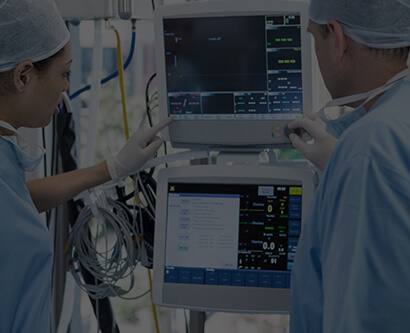
The portable blood pressure monitor measures blood pressure, heart rate, blood saturation, and posture and transmits the data to a tablet app.

IoT Device Development for Oil & Gas Sensors
The project aimed to develop a connected device for various sensors used in the oil and gas industry. There are many options for using the IoT.
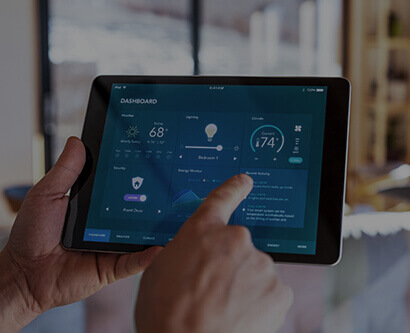
A Control Panel for IoT-Based Smart Home Automation System
Within the scope of the project, the team developed three PCBs, a custom Linux image, and drivers for different modules of the smart home system.
Reviews
"Integra Sources' extensive preparation beforehand helped give confidence to the client that they chose the right partner. Despite the time difference, they are able to stay in constant communication. Integra's dedication to the project has led the client to develop an ongoing relationship."

Christophe Baudia
CEO at GeoMoby
"The database has satisfied all scope requirements. The upgrades have improved communication and performance. Team strengths include accessibility and problem-solving and they are unafraid to research problems and develop their own solutions. Integra demonstrated strong management skills when they managed our servers for a week during an important trade show; we showcased our product at the event. Communication channels are always fluid and straightforward."

Eduardo Ruiz
Founder & CEO at Ruiz Aerospace Manufacturing
"Integra's team helped us clarify our requirements and change systems architecture to achieve the final goal. I'd say that the flexibility and enthusiasm of both engineering and management teams throughout the whole project were some of the things we value most in our collaboration."

Dr. Sam Wass
University of East London
Awards






Show more
Frequently Asked Questions
Read this information to better understand our BSP development services.
Do you develop and customize device tree files for new or modified hardware?

Can you take over a BSP that another team or SoC vendor started but didn't finish?
Do you support real-time Linux for time-sensitive applications?
How do you ensure security in a BSP, including secure boot?
Can you port an existing BSP to a new SoC or hardware revision?
When do I need to build a BSP?
Can I use the mainline version of the kernel?
How can boot time be optimized?
Our tech stack






























We've worked with enterprises and startups from Europe, the USA, Australia, and Asia



























Related services
Check out other services we provide.

Firmware Development Services
As a firmware development company, we have extensive experience with hardware, operating systems, low-level diagnostic and performance tools.
LEARN MORE 
LEARN MORE

Embedded Hardware Design & Development Services
We build consumer, commercial, and industrial embedded systems for modern products. Create solutions for telecom, retail, and other application areas.
LEARN MORE
LEARN MORE

Embedded Software Design & Development Services
Firmware development, software development for single board computers (SBC) and board support package (BSP) development – these are the types...
LEARN MORE
LEARN MORE