


We provide comprehensive firmware documentation covering software architecture, module descriptions, communication protocols, HAL documentation, API references, and build instructions.

Firmware Development Services
We develop production-ready firmware for microcontrollers and digital signal processors, turning hardware requirements into stable device functionality. Our embedded firmware development services cover performance, resource usage, and integration with surrounding hardware and software components. You receive documented, maintainable software designed for reliable operation and further product development.

What we do
Firmware can become a bottleneck even when the hardware is well designed. Our firmware development services resolve performance limitations, communication failures, and low-level integration issues across microcontroller- and SoC-based systems. We develop new firmware, improve existing code, and work with operating systems, peripheral interfaces, and diagnostic tools to achieve stable system behavior throughout the product lifecycle.


RTOS Development
Industrial controllers, medical equipment, and robotic systems must execute multiple tasks while maintaining precise timing. We develop custom firmware using FreeRTOS, Zephyr, ThreadX, NuttX, and other real-time operating systems to schedule tasks deterministically. The result is predictable response times and stable system behavior under changing workloads.
ROS Development
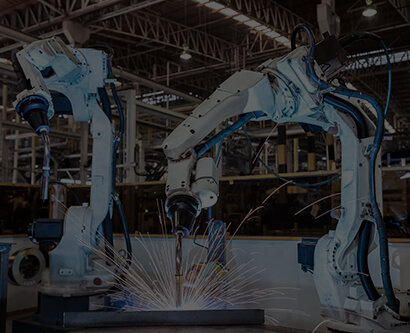
Reliable robotic automation starts with software that coordinates every device in the system. We combine firmware design services with ROS integration to connect sensors, motion controllers, and embedded systems within a unified communication framework. The result is precise machine coordination, faster deployment of robotic cells, and easier expansion of manufacturing and warehouse automation systems.
Bare Metal
Some embedded products perform best without an operating system. We develop bare-metal firmware that runs directly on the microcontroller, minimizing latency, reducing memory footprint, and providing precise control over hardware resources. It is well suited for industrial controllers, motor drives, and safety-related electronics that require deterministic behavior from the moment power is applied.
Digital Signal Processing (DSP)
When signal processing workloads outgrow the capabilities of a general-purpose MCU, DSP architecture becomes the right choice. We develop digital signal processing software that leverages DSP architecture to accelerate filtering, spectral analysis, and other compute-intensive algorithms. The result is faster data processing, lower energy consumption, and dependable operation in portable medical devices, measurement instruments, and industrial automation equipment.
Hardware Abstraction Layer (HAL)
Changing hardware shouldn't mean rewriting your firmware. We separate application code from hardware-specific code through modular hardware abstraction layer design. This architecture lets your team move to new microcontrollers with minimal firmware changes, reducing porting effort and helping keep development on schedule.
Legacy firmware migration
Many embedded products rely on firmware that has evolved over years with little documentation or consistent architecture. Our legacy firmware migration services analyze existing code, reconstruct the original design intent, and reorganize the software into a maintainable structure. This lowers support costs, reduces development risk, and makes future enhancements faster and more predictable.
MCU firmware porting
Choosing a new microcontroller is often driven by supply availability, product expansion, or new functional requirements. We adapt firmware for alternative MCU platforms by updating drivers, startup code, peripheral configuration, and device initialization for reliable operation. This keeps product development on schedule and gives engineers greater flexibility as hardware requirements evolve.
What You Get

Documentation

Source Code
You receive the firmware source code, project files, build scripts, and any third-party libraries used in the project. The code is structured, documented, and ready for future maintenance and development.

Verification & Test Reports
We deliver firmware verification and test reports covering functional, interface, performance, and hardware integration testing. The results confirm correct operation on the target hardware.

Intellectual Property Rights
After project completion, you receive full ownership of the firmware, source code, documentation, custom algorithms, and all project deliverables, giving you full control over future development and manufacturing.

Our projects
Check Integra’s previous projects delivered within our firmware development services.

Aircraft Towing Protection System
The system helps airport ground personnel carry out aircraft towing safely. It consists of parking sensors, a mobile app, and a web portal.

Customizable Capacitive Keyboard
Integra Sources created a highly customizable keyboard that meets all modern requirements and will appeal to the fans of exclusive products.

Vibration Conditioning Solution for Industrial Automation
The solution measures industrial machinery vibration. We implemented analog and digital filters that make the output signal smooth and strong.

Medical Alert Bracelet That Delivers Assistance at the Touch of a Button
A bracelet designed for patients at military hospitals and clinics in the USA. It notifies hospital staff about an emergency with the patient.
Reviews
"Integra Sources' extensive preparation beforehand helped give confidence to the client that they chose the right partner. Despite the time difference, they are able to stay in constant communication. Integra's dedication to the project has led the client to develop an ongoing relationship."

Christophe Baudia
CEO at GeoMoby
"The database has satisfied all scope requirements. The upgrades have improved communication and performance. Team strengths include accessibility and problem-solving and they are unafraid to research problems and develop their own solutions. Integra demonstrated strong management skills when they managed our servers for a week during an important trade show; we showcased our product at the event. Communication channels are always fluid and straightforward."

Eduardo Ruiz
Founder & CEO at Ruiz Aerospace Manufacturing
"Integra's team helped us clarify our requirements and change systems architecture to achieve the final goal. I'd say that the flexibility and enthusiasm of both engineering and management teams throughout the whole project were some of the things we value most in our collaboration."

Dr. Sam Wass
University of East London
Awards






Show more
Frequently Asked Questions
Read this information to better understand our firmware development services.
How do you approach firmware architecture for resource-constrained MCUs?

How do you handle real-time constraints in firmware for time-critical applications?
Can you take over and debug firmware that another team started?
How do you ensure firmware reliability in the field after deployment?
What's your process for optimizing existing firmware for performance or power consumption?
Can you develop firmware that complies with industry-specific standards (e.g., MISRA C, IEC 62304, industrial safety requirements)?
I don't have hardware ready. Can you build firmware without it?
What is your usual approach to firmware development?
Our tech stack



























Industries
LEARN MORE ABOUT THE INDUSTRIES WE WORK WITH



Agriculture
Environmental sensing, actuator control, and wireless connectivity for agricultural robots, monitoring equipment, precision farming systems, and smart irrigation systems.

We've worked with enterprises and startups from Europe, the USA, Australia, and Asia


























Related services
Check out other services we provide.

Board Support Package (BSP) Development
As part of our BSP development services, we create low-level operating system code, device driver code, and other files with...
LEARN MORE 
LEARN MORE

Embedded Software Design & Development Services
Firmware development, software development for single board computers (SBC) and board support package (BSP) development – these are the types...
LEARN MORE
LEARN MORE

Embedded Hardware Design & Development Services
We build consumer, commercial, and industrial embedded systems for modern products. Create solutions for telecom, retail, and other application areas.
LEARN MORE
LEARN MORE